
UPSC PYQ Analysis: Complete Overview
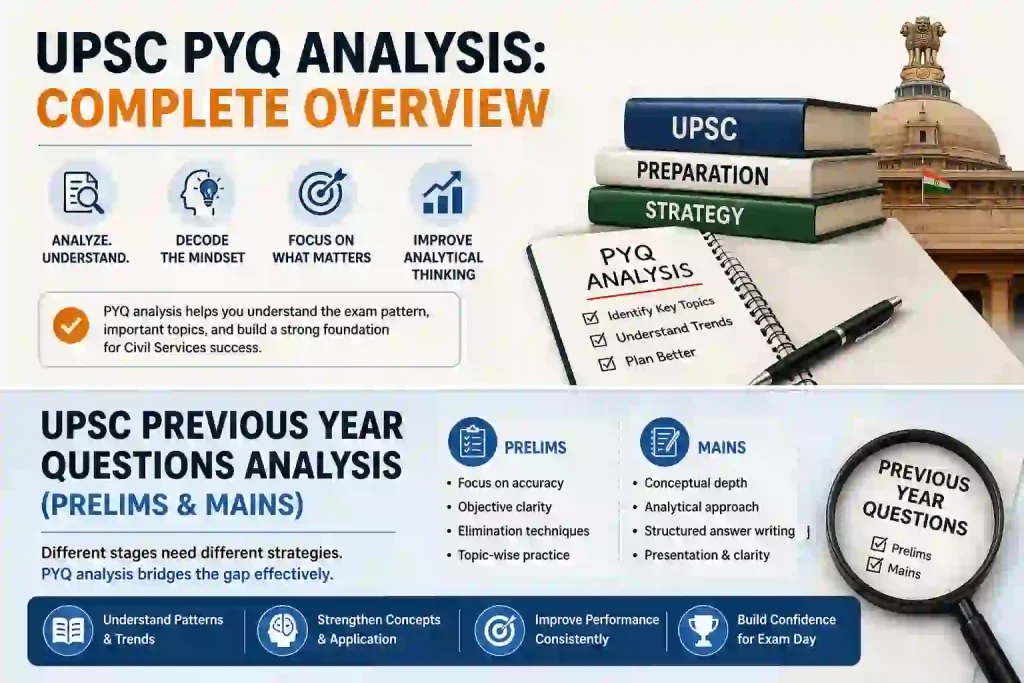
UPSC PYQ analysis is one of the most powerful tools for understanding the Civil Services Examination pattern. By analyzing previous year questions, aspirants can decode the mindset of the examiner and identify what topics are consistently important. Instead of randomly studying multiple sources, PYQ analysis helps in focusing only on relevant areas.
Moreover, studying UPSC PYQs with answers and explanation allows candidates to connect static concepts with dynamic current affairs. This approach not only improves retention but also enhances analytical thinking, which is crucial for both prelims and mains stages of the exam.
📚 Ancient History: Concepts + PYQ Analysis
🎥 UPSC & TNPSC Video - Pdf Resources
UPSC Previous Year Questions Analysis (Prelims & Mains)
UPSC Prelims and Mains demand different approaches, and PYQ analysis helps in understanding this distinction clearly. While prelims focus on objective clarity and elimination techniques, mains require conceptual depth and structured answer writing.
To effectively utilize PYQs for both stages, candidates should focus on the following aspects:
- Understanding question framing patterns
- Identifying recurring themes and topics
- Differentiating between factual and analytical questions
- Practicing answer writing for mains questions
By consistently practicing these aspects, aspirants can develop a strong exam-oriented mindset. Over time, this structured approach reduces confusion and increases confidence during the actual examination.
UPSC PYQ Topic-wise Analysis for Better Preparation
Topic-wise analysis of UPSC PYQs helps aspirants break down the vast syllabus into manageable sections. Instead of studying subjects in isolation, this method allows candidates to understand how different topics are interconnected.
For effective topic-wise analysis, focus on:
- Categorizing questions under subjects like Polity, History, Economy, and Environment
- Identifying high-weightage topics within each subject
- Linking static topics with current affairs developments
- Revising frequently asked concepts multiple times
This approach ensures that preparation becomes more strategic rather than exhaustive. It also helps in prioritizing topics that have higher chances of appearing in the exam.
UPSC Prelims PYQ Analysis with Key Concepts
Prelims PYQ analysis is essential for mastering objective-type questions. The key is not just solving questions but understanding the concepts behind them.
While analyzing prelims PYQs, candidates should:
- Focus on concept clarity rather than memorization
- Practice elimination techniques for tricky questions
- Analyze incorrect options to avoid repeated mistakes
- Track frequently asked factual areas
This method improves accuracy and helps in minimizing negative marking. Over time, aspirants develop the ability to solve questions even when they are unsure of the exact answer.
How to Analyze UPSC PYQs Effectively
Analyzing PYQs is not just about reading questions; it requires a structured approach. Many aspirants make the mistake of solving PYQs without understanding their deeper significance.
A proper PYQ analysis strategy includes:
- Reading the question carefully and identifying the core concept
- Referring to standard textbooks to understand the background
- Making short notes for revision
- Revisiting the same question after a few days
Adopting this method strengthens long-term memory and deepens understanding of concepts. It also makes it easier to spot weak areas that require additional focus and improvement.
Best Strategy to Use UPSC PYQs in Preparation
Using PYQs strategically can significantly improve preparation efficiency. Instead of treating them as practice questions, they should be used as a roadmap for preparation.
An effective strategy includes:
- Starting preparation with PYQ analysis before reading new topics
- Integrating PYQs into daily study routines
- Using PYQs for revision instead of passive reading
- Combining PYQs with mock tests for better performance
This method ensures that preparation remains focused and aligned with the actual exam pattern. It also prevents wasting time on less relevant topics.
UPSC PYQ Trend Analysis (Last 10–20 Years)
Analyzing trends from the last 10–20 years provides valuable insights into how the exam pattern has evolved. It helps aspirants understand which topics are consistently important and which ones are gaining relevance.
Key observations from trend analysis include:
- Increasing focus on conceptual and analytical questions
- Greater integration of current affairs with static subjects
- Shift from direct questions to application-based questions
- Consistent importance of core subjects like Polity and Economy
Understanding these trends helps aspirants adapt their preparation strategy accordingly. It also ensures that they stay ahead of changing exam patterns.
Important Topics Based on UPSC PYQ Analysis
Identifying important topics through PYQ analysis is crucial for smart preparation. Instead of covering the entire syllabus equally, aspirants can focus more on high-yield areas.
Some key areas to prioritize include:
- Indian Polity and Governance concepts
- Modern Indian History and Freedom Movement
- Economy basics and current economic developments
- Environment and Ecology topics
- Science and Technology applications
Prioritizing these areas improves the likelihood of achieving better scores. It also helps you utilize your time and study resources more effectively throughout your preparation.
UPSC PYQ Analysis and Revision Plan
A proper revision plan based on PYQ analysis helps in reinforcing concepts and improving retention. Without revision, even the best preparation strategies may fail.
An effective revision plan includes:
- Weekly revision of PYQs and related concepts
- Monthly consolidation of important topics
- Practicing mixed questions from different subjects
- Revisiting difficult questions multiple times
This structured revision approach ensures that concepts remain fresh and easily recallable during the exam. It also builds confidence and reduces exam stress.
UPSC PYQ Analysis PDF with Key Concepts
Providing PYQ analysis in PDF format is highly beneficial for aspirants. It allows them to revise important concepts anytime without relying on multiple sources.
A well-structured PYQ PDF should include:
- Topic-wise questions with detailed explanations
- Key concepts highlighted for quick revision
- Trend analysis summaries
- Important facts and shortcuts
Such resources act as a one-stop solution for revision and practice. They also save time and improve overall preparation efficiency.
FAQs
UPSC PYQ analysis refers to studying previous year questions to understand exam patterns, important topics, and question trends. It helps aspirants focus on relevant areas instead of covering the entire syllabus blindly.
Ideally, aspirants should analyze at least the last 10–20 years of UPSC PYQs. This range provides a clear understanding of long-term trends and topic importance.
To analyze prelims PYQs effectively, focus on understanding the concept behind each question rather than just memorizing answers. Practice elimination techniques and analyze why other options are incorrect.
For mains, PYQs should be used to practice structured answer writing. Focus on understanding the demand of the question and presenting answers in a clear introduction-body-conclusion format.
Yes, UPSC PYQs are one of the best sources to identify important topics. By analyzing repeated questions, aspirants can prioritize high-weightage areas in their preparation.
While UPSC PYQs are extremely important, they are not sufficient on their own. They should be used along with standard textbooks, current affairs, and revision.